
The Delhi government had been forced to impose lockdown amid a steep rise in COVID-19 cases on April 20. Although, the cases have come down and positivity rate has reduced from the high of 35 per cent on April 26 to around 23 per cent now, but strictness is needed.
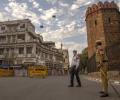
The Centre has announced an extension for two more weeks in the nationwide lockdown. However, several relaxations will be allowed as per zones.
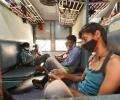
The lockdown, which was first clamped on March 25 and spanned for 21 days, had registered 10,877 cases, while the second phase of the curbs that began on April 15 and stretched for 19 days till May 3, saw 31,094 cases.

If the current restrictions remain in place until the end of May, we estimate that the cumulative loss of activity could amount to around $10.5 billion, or around 0.34 percentage point (pp) of annual nominal gross domestic product, say Barclays economists.

Uddhav Thackeray also said that the decision on lifting the curbs completely after April 30 will be taken depending upon the prevailing situation.

The Maharashtra government on Sunday extended till June 30 the lockdown in the entire state, and announced easing of restrictions and phase-wise resumption of activities under the "Mission Begin Again".

With the world's worst pandemic outbreak scarring nascent economic recovery, the government may at the beginning of the unlock phase announce another stimulus package for the most hit sectors such as small business and self-employed, Bernstein said. The brokerage in a note said its macro index suggests a deterioration in economic activity during April/May. "Energy consumption has moderated, with power down over 4 per cent and oil consumption down over 16 per cent in May so far (all 2-year CAGR). "E-waybills are down 16 per cent, suggesting the impact of scale down in factory production for some product categories, owing to the shut down in retail outlets.

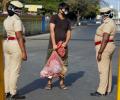
From making 'COVIDIOTS' (a term coined for those flouting restrictions) squat on the road and do sit-ups, to making them pose with pamphlets admitting their fault, police officials have pulled out all the stops from their kitty of creativity to drive home the message.

Thackeray said lockdown has been partially eased because economic activities need to continue as 'now we have to learn to live with the virus'.

Kerala, Karnataka, Tamil Nadu and Telangana have announced a lockdown of educational institutions, malls and other places that attract people in large numbers, even as some of them have been reporting increase in positive cases.

Tope also admitted that the "chalta hai" (laidback) attitude had creeped in after the government flattened the infection curve.

India is currently under the 21-day lockdown since March 25, with only essential services exempted to contain the fast-spreading virus.

The UK's lockdown, which involves strict stay at home measures with movement allowed for limited urgent purposes only if "absolutely necessary" and for one form of daily exercise, came into force on March 23 after a televised address by Boris Johnson.

Companies from Unilever to Proctor & Gamble, Nestl, Coca-Cola and PepsiCo have all alluded to lockdown challenges in India and the globe as well as the impact it will have on April-June as well as full-year numbers.

According to a ministry of home affairs order, those allowed to travel to India include OCI cardholders who wish to come to the country on account of family emergencies. Minor children born to Indian nationals abroad and holding OCI cards, couples where one spouse is an OCI cardholder and the other is an Indian national and they have a permanent residence in India, and university students who are OCI cardholders (not legally minors) but whose parents are Indian citizens living in India were also allowed to visit the country.

The video conference, which began at 11 am, comes amid indications that the central government may extend the nationwide lockdown with some possible relaxations even as Punjab and Odisha have already announced extending the lockdown beyond April 14 when the current spell of 21-day shutdown across the country ends on Tuesday.

The central government may, however, advise state authorities to continue with strict curbs in COVID-19 containment zones in the worst-affected 30 municipal areas that account for 80 per cent of the positive cases in the country. These 30 municipal areas are from Maharashtra, Tamil Nadu, Gujarat, Delhi, Madhya Pradesh, West Bengal, Rajasthan, Uttar Pradesh, Telangana, Andhra Pradesh, Punjab and Odisha.

Chief Minister Arvind Kejriwal said restrictions due to COVID-19 were causing terrible financial stress to the poor.

Maharashtra Chief Minister Uddhav Thackeray announced a statewide curfew for 15 days from 8 am on April 14 to contain the rapid spread of the coronavirus in its second wave. With Section 144 being imposed across the state, Thackeray essential services have been exempted from the restrictions. The curfew will be in place till 7 am on May 1.

The state government will review the lockdown situation in Guwahati after seven days from the enforcement of the restrictions.

'Why not simply make some more ventilators and find some more beds? How much would it cost?' asks Ambassador M K Bhadrakumar.

However, Faul did not reveal if any player returned a positive result.

Government and private bus transport services, now allowed within districts barring Chennai, its nearby areas and Madurai would cease to be operational from July 1 to 15, the government said.

In a relief for people travelling long distances, the Indian Railways is set to resume serving cooked meals on trains, a service which was discontinued in the wake of the coronavirus pandemic.

Massive crowds thronged liquor stores, more vehicles plied on roads and cab-hailing platforms resumed services as India entered the third phase of the lockdown on Monday with further easing of curbs except in containment zones in the shadow of the highest rate of recovery yet from coronavirus.

In case, Brisbane can't host the Test or Indians refuse to travel, Sydney will be the back up venue.

The outbreak and lockdown have thrown up a number of challenges, such as layoffs, pay cuts and a general slowdown. Many subscribers after their unsuccessful attempts to use the scheme have taken to social media to voice their complaints, as the EPFO website and grievance portal suffer outages and its customer helpline remains unreachable.

From the middle of next week, shops, personal care, gyms and churches can reopen as part of a bolstered three-tiered system. As part of the restrictions, people will be expected to continue to work from home if they live in a Tier 1 region; in Tier 2, alcohol can only be served with a meal; and in Tier 3, all forms of hospitality except takeaways will have to close.

The economy faces more downside risks now as economic disruptions arising from the second wave are likely to stabilise only from July, warned the Swiss brokerage USB Securities. Last month, the brokerage had cut its GDP forecast by 150 bps to 10 per cent for FY22, which though is much higher than the consensus projections by others with some pegging it at as low as 8 per cent. Though adverse impacts on sequential growth is less severe than in the June 2020 quarter when it plunged by 23.9 per cent, as lockdowns are more targeted and localised and households and businesses have adjusted to the new normal now, still, it is increasingly possible that normalcy returns only by July as against our baseline assumption of June.
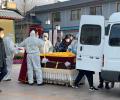
The global health intelligence company had said China's zero-COVID strategy also means the population has almost no naturally acquired immunity through the previous infection.
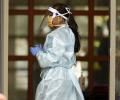
Residents have been advised against leaving their homes apart for four activities -- purchasing essential items, medical care or caregiving, exercise and study/work.

The experts agreed that the lockdown has helped in slowing down spread of the virus but insisted that the situation has not reached a plateau and that there was an urgent need to upgrade healthcare facilities to deal with the crisis.

Shops selling essentials including vegetables functioned from morning till 2 pm and private vehicles and autos, taxis were off the roads.
A limited number of activities will remain prohibited across the country, irrespective of the zone, including travel by air, rail, metro and inter-state movement by road, running of schools, colleges, and other educational and training/coaching institutions.

Termed 'Unlock 1', the Centre on Saturday issued fresh guidelines relaxing the nationwide lockdown, the fourth phase of which ends on May 31.
He also announced an assistance of Rs 3,000 for accredited journalists while acknowledging their role in the dissemination of information on COVID19.

Almost all states and Union Territories have extended the curbs which they first started imposing in mid-April as the second COVID wave hit the country.
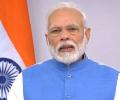
The task force, to be headed by Finance Minister Nirmala Sitharaman, will look at measures to limit economic hardship caused by the Covid-19 pandemic, he said in his address to the nation.

The journey of getting used to a new way of life -- without domestic help, without the necessity of dressing up to step out and just staying cooped up indoors -- has been out of the ordinary, equal parts good, bad and ugly.
A bench of Justices Hima Kohli and Subramonium Prasad said the government is expected to remain cognisant of the situation and evaluate it closely and if it is found that the rate of infection is going up, they can always review their decision and impose curbs, depending upon the situation.
 © 2025 Rediff.com - Investor Information - Advertise with us - Disclaimer - Privacy Policy - Sitemap - Feedback - About us - Terms of use - Grievances